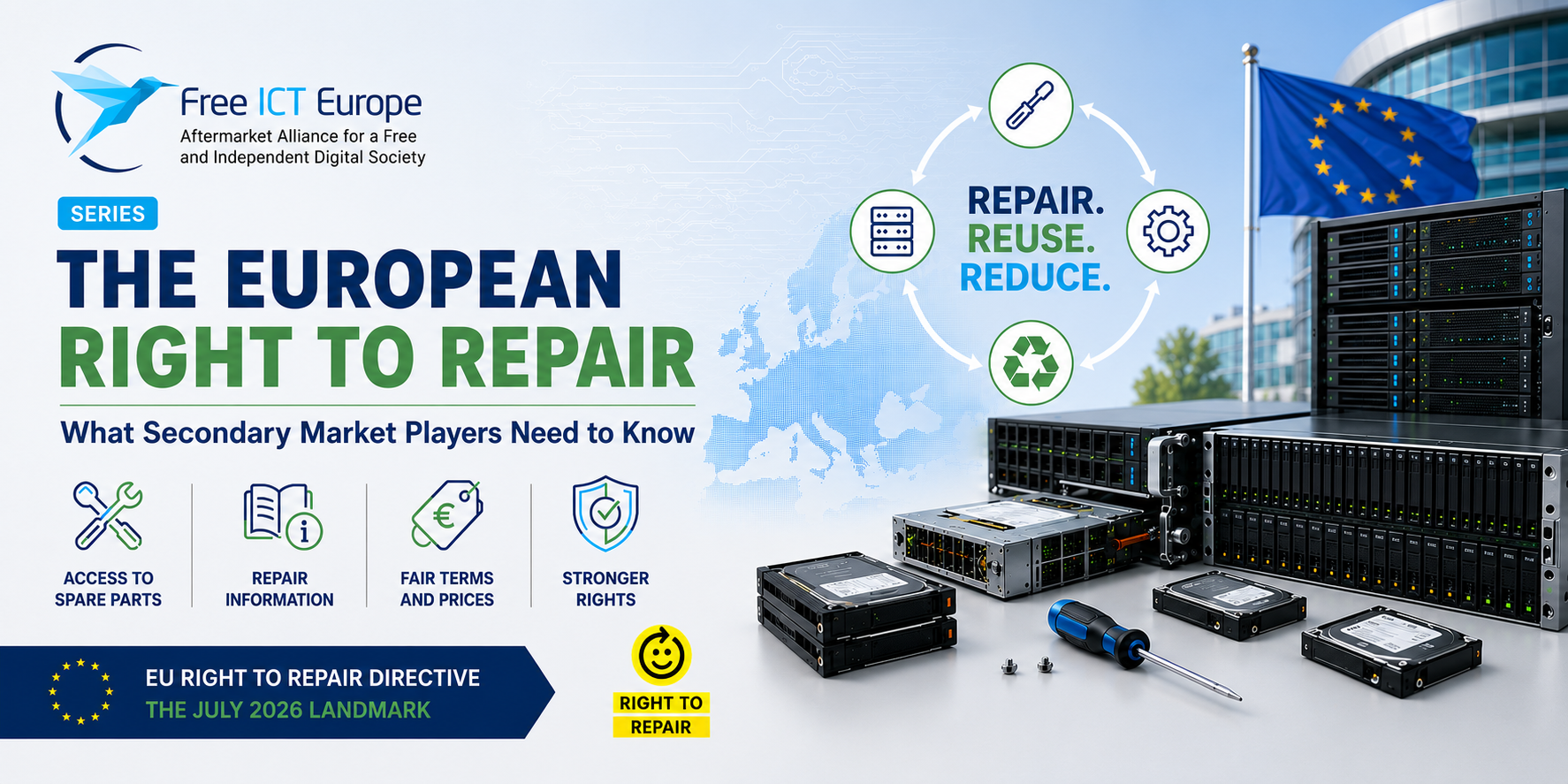
Right to Repair
Right to Repair
Part 6: Opportunity Within Constraints


Jan Hoogstrate, and
Mascha Visser
30 Second Summary
• The Right to Repair Directive is a major step forward for Europe's independent repair sector.
• It creates new opportunities, but it is not a complete solution.
• Businesses should prepare now to make the most of their new rights.
• The future of repair will depend on continued collaboration between industry and policymakers.
The European Right to Repair Directive represents a significant step forward for professional repairers, refurbishment businesses and the independent IT aftermarket. It creates new rights, improves access to repair information and spare parts, and strengthens the legal position of independent repair businesses across Europe.
However, the Directive should be viewed as a foundation rather than a finished solution. Success will depend not only on the legislation itself, but also on how effectively it is implemented and enforced by Member States.
For businesses operating in the secondary market, there are several practical actions that can be taken today:
- Register as a professional repairer through the national repair register when available. This will become an important gateway to accessing OEM repair information and services.
- Use the new price transparency requirements to demonstrate value and compete fairly with manufacturer repair services.
- Document any instances where manufacturers refuse access to spare parts, repair information or diagnostic tools.
- Continue developing high standards for refurbished products, data handling and security, even where legislation has not yet established clear requirements.
- Monitor future Ecodesign developments, particularly those relating to PCs, laptops and external power supplies, as these are expected to expand the scope of legally protected repair.
The Right to Repair Directive is a major victory for Europe's independent repair ecosystem, but it is only the beginning. The opportunities it creates will be realised by businesses that actively engage with the new framework, collaborate with policymakers and continue to advocate for improvements where gaps remain.
In Plain English
The Right to Repair is good news for the independent repair industry, but there is still work to do.
The new rules make it easier for professional repair businesses to access parts and information, creating more opportunities to repair products instead of replacing them.
At the same time, repair businesses should stay informed, understand their new rights and actively use them. Future legislation will continue to expand repair opportunities, and businesses that prepare now will be well positioned to benefit.
The Right to Repair is not the end of the journey. It is the beginning of a stronger, more competitive and more sustainable repair market.
Why this matters
The transition to a circular economy will not happen through legislation alone.
It requires collaboration between policymakers, manufacturers, professional repairers, refurbishers and end users. The Right to Repair Directive provides an important legal foundation, but its real success will be measured by how many products remain in use, how much electronic waste is avoided and how competitive Europe's independent repair sector becomes.
At Free ICT Europe, we believe repair should be the first choice, not the last resort. This Directive brings Europe one step closer to that goal, and we will continue working with policymakers and industry to ensure the remaining barriers are addressed.
This article concludes Free ICT Europe's six part series on the European Right to Repair Directive.
Previous: Free ICT Europe's Roadmap
Thank you for reading.
To stay informed about developments in Right to Repair, digital sovereignty and the circular ICT economy, follow Free ICT Europe and join the conversation as we continue to shape the future of the independent IT aftermarket.